Cueva de las Manos, Santa Cruz: A Complete Guide to Visiting
In northwestern Santa Cruz province, the Patagonian wind echoes powerfully through the depths of the Río Pinturas Canyon. It's an imposing landscape of reddish cliffs and endless steppe, but its true treasure hides in the rock shelters. There, protected from the passage of time, lies the Cueva de las Manos (Cave of the Hands), the most important archaeological site in Patagonia and one of the oldest and most fascinating expressions of rock art in South America.
Declared a UNESCO World Heritage Site in 1999, this place is not just a tourist stop; it's a deep journey into the past, a direct window into the lives of the hunter-gatherer communities that inhabited the region more than 9,000 years ago.
If you're planning a trip to Santa Cruz or Argentine Patagonia and want to combine culture with the best nature tourism, this complete guide covers everything you need to know: its history, how to get there, what to do in the area and the best tips for visiting.
(Remember this wonder is part of a much larger circuit. To plan an unforgettable trip through the region, don't miss our complete guide to the national parks of Argentine Patagonia, where we explain why this sector is the south's new hidden gem).
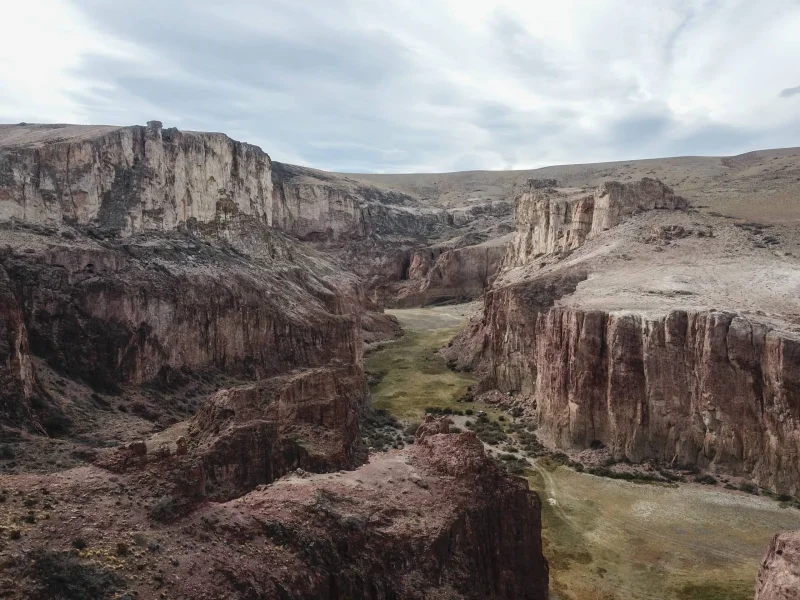
Photography: Natalia Trzcina
A bit of history: who painted the Cueva de las Manos?
The rock paintings of Cueva de las Manos were created by human groups who lived in the canyon between 7,300 BC and 1,000 AD. These early inhabitants were nomads who based their subsistence on hunting guanacos and rheas, using the canyon as a natural shelter from the harsh Patagonian climate.
What makes this site unique is the incredible variety, layering and conservation of the scenes. Archaeologists divide the paintings into three main styles or stages:
- Group A (hunting scenes): The oldest. They show dynamic guanaco hunts using herding strategies, where hunters used sticks and primitive bolas.
- Group B (hand stencils): The site's trademark. Hand silhouettes made with a blowing (stencil) technique using diluted mineral pigments. It's striking that the vast majority of the hands are left hands.
- Group C (geometric figures): The most recent expressions, dominated by abstract designs, lines, circles and figures in intense red tones.
The colors (reds, yellows, blacks, whites) were obtained by mixing local minerals, such as iron oxide or manganese, with organic components. Seeing them today, with their original sharpness intact on the living rock, is a goosebumps-inducing experience.
How to get to Cueva de las Manos, Santa Cruz
Cueva de las Manos is in northwestern Santa Cruz, over the Río Pinturas Canyon, within the Parque Patagonia area. It's a Provincial Park accessed from National Route 40. For reference: the park's Portal Cañadón Pinturas is 54 km south of Perito Moreno, and the traditional vehicle access to Cueva de las Manos is about 87 km south of Perito Moreno.
Option 1: By car via National Route 40 (Direct Vehicle Access)
This is the traditional alternative if you're traveling in your own vehicle. From the town of Perito Moreno (87 km north of the provincial park), drive south on the legendary RN 40. At the Bajo Caracoles settlement, take the signposted turn-off toward Parque Provincial Cueva de las Manos, following internal gravel roads.
Option 2: On foot via the Bajada de los Toldos Trail (from Portal Cañadón Pinturas)
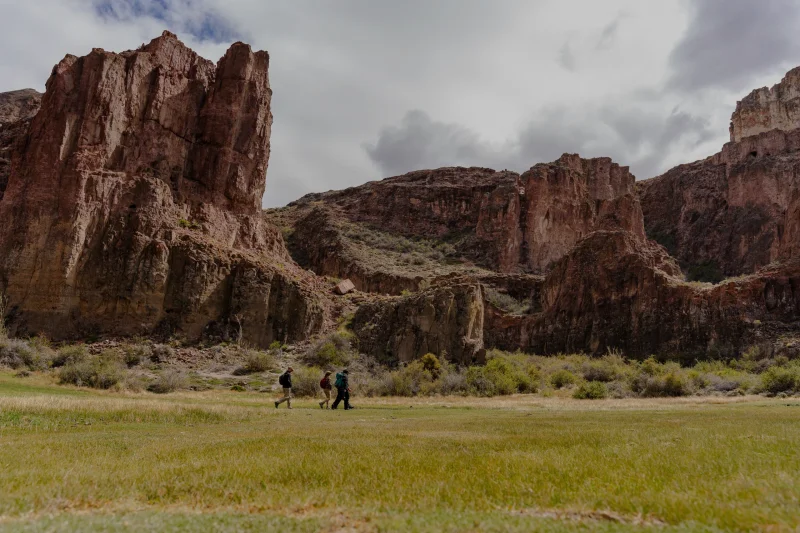
For true trekking lovers, this is the best option. You can drive on RN 40 to Parque Patagonia's Portal Cañadón Pinturas. From there, a network of free self-guided trails begins. The classic trail crosses the imposing Río Pinturas Canyon on foot: a moderate-intensity hike of about an hour and a half that takes you down to the river and then up the opposite canyon wall straight to the archaeological site's information center. The views of the glacial landscape and cliffs from here are spectacular. In practice, allow half a day for the full experience of hike + visit.
In both cases the visit is guided and paid.
If you want to check detailed distances, maps and public transport combinations, we recommend consulting the official Parque Patagonia How to Get There section.
What to do in the area: portals and complementary activities
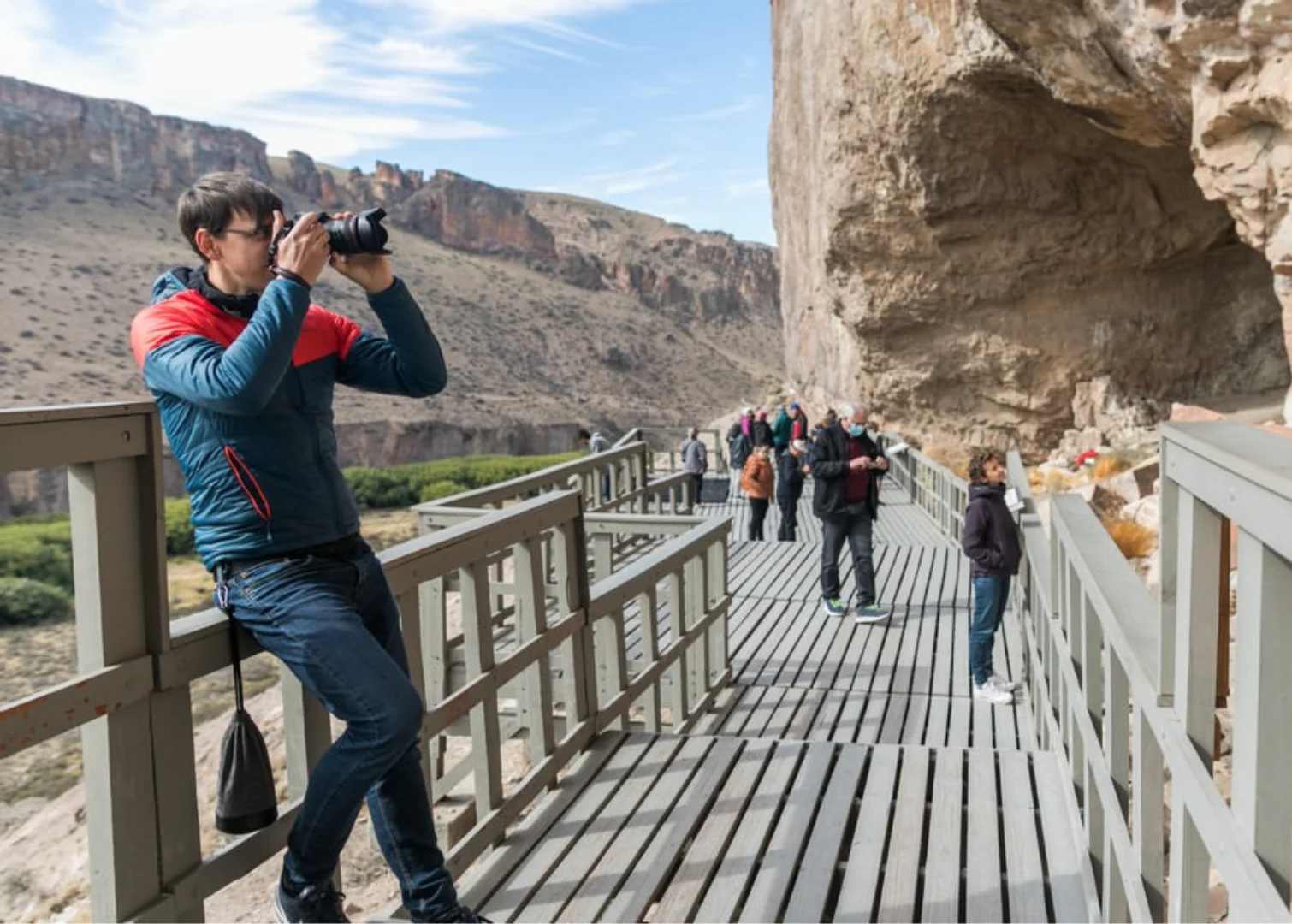
The visit to the Cueva de las Manos site is guided and paid, and the tour follows walkways that skirt the painted rock shelters. General access hours are 9:00 a.m. to 7:00 p.m.
However, the trip doesn't end at the walkways. The area surrounding the site, protected under the Parque Patagonia conservation project, offers a huge range of nature activities:
- Portal Cañadón Pinturas: Works as a perfect base. It has more than 50 kilometers of trails ideal for wildlife watching (it's very common to come across guanaco herds, rheas or condors soaring overhead). It also has a Planetarium and interactive Interpretation Center to learn about local geology and the Patagonian night sky.
- Portal Cañadón Caracoles: From this specific access you can do alternative treks like the Tierras Blancas Trail (6 km), the Balcón Sur Trail (8 km) or take on the Huella Cañadón Caracoles (12 km).
- Rock climbing: If you're into adventure sports, Cañadón Caracoles has a free-use area with nearly 80 climbing routes of different difficulties, framed by stunning reddish stone walls.
- Alero Charcamata excursion: A spectacular secret for those who want to go further. It's a full-day excursion to a monumental cave with an 80-meter-wide mouth and excellently preserved rock paintings. Only available with licensed guides and prior booking.
Where to stay and services in the area
To explore the region at ease and enjoy the magical steppe sunsets, it's ideal to spend at least one or two nights in the area. Options suit every type of traveler:
- Lodging in nearby towns: You can base yourself at the hotels and lodges of the neighboring cities of Perito Moreno or Los Antiguos (famous for its cherry orchards on the shores of Lago Buenos Aires).
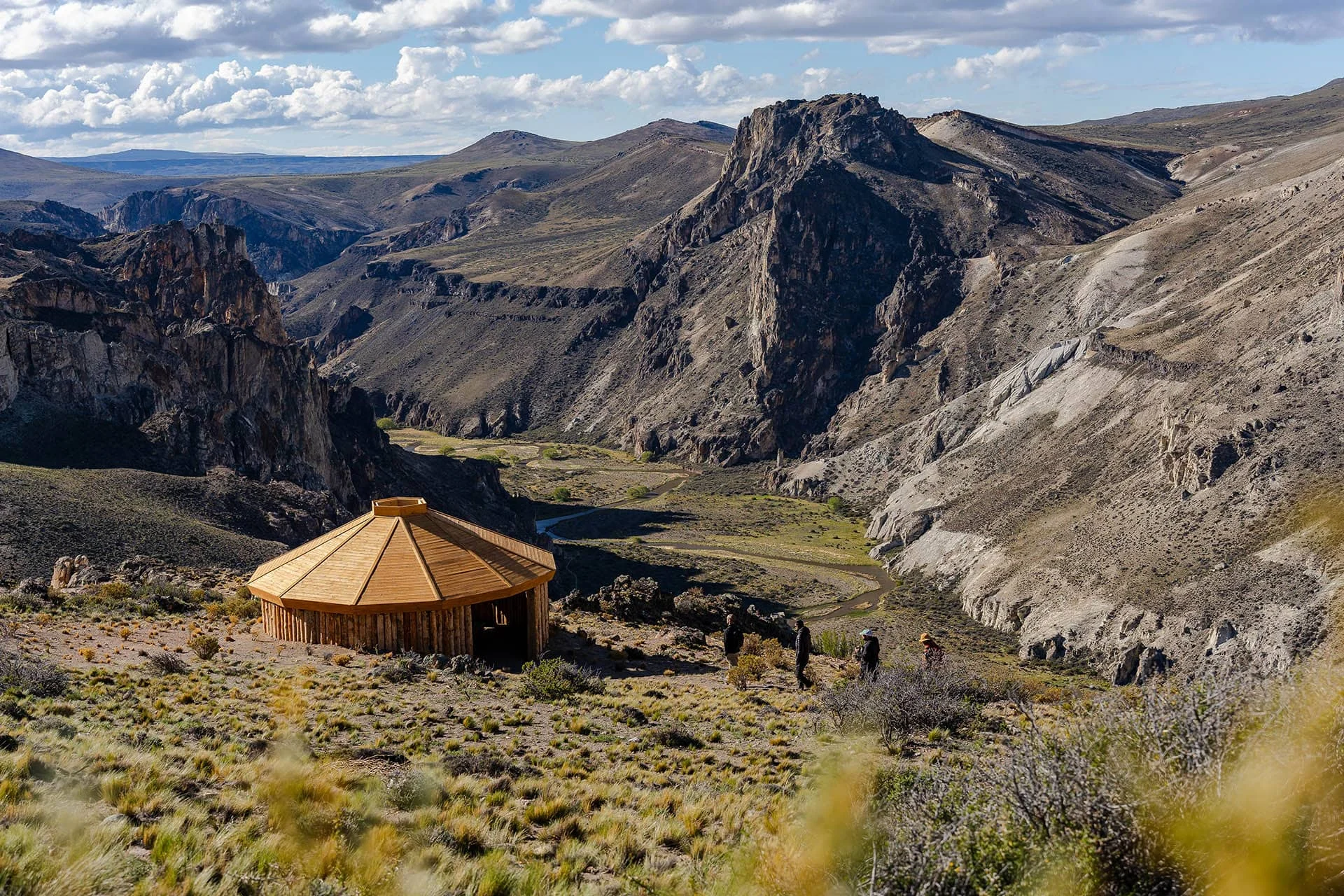
- Lodge inside the park: For an immersive experience with all comforts, Portal Cañadón Pinturas has a lodge and a general store offering prepared meals, drinks and regional products.
- Wilderness campgrounds: If camping under unpolluted starry skies is your thing, Camping Cañadón Caracoles offers pitches, tables and a shared central shelter (it's wilderness camping, so bring plenty of drinking water and register in advance).
You can check rates, exact locations and contact local providers directly in the Where to Stay section of the Parque Patagonia site.
Key tips and recommendations for your visit
- Layered clothing: Steppe weather is, as in all of Patagonia, changeable. Even in summer, bring a good windbreaker, a light fleece, comfortable trekking shoes with good grip, a hat and sunscreen.
- Fuel and cash: Before leaving Perito Moreno or Los Antiguos, make sure you have a full tank. Distances are long and gas stations are few. Also carry some cash for admission fees.
- Fees: Access to the trails at the Parque Patagonia portals (Caracoles, La Ascensión, El Sauco) is 100% free. Entry to the Cañadón Pinturas and Cueva de las Manos portals has a single fee of AR$10,000. Entry is free for Santa Cruz residents, retirees and children under 12, with the corresponding documentation. You can pay by card or bank transfer when registering at the information centers.
- Responsible tourism: Remember you're visiting a fragile ecosystem and an archaeological sanctuary of incalculable value. Touching the paintings, leaving the walkways or leaving trash on the trails is strictly prohibited. Everything you bring with you goes back with you.