

Patagonia Park adds new yurts in the heart of the steppe
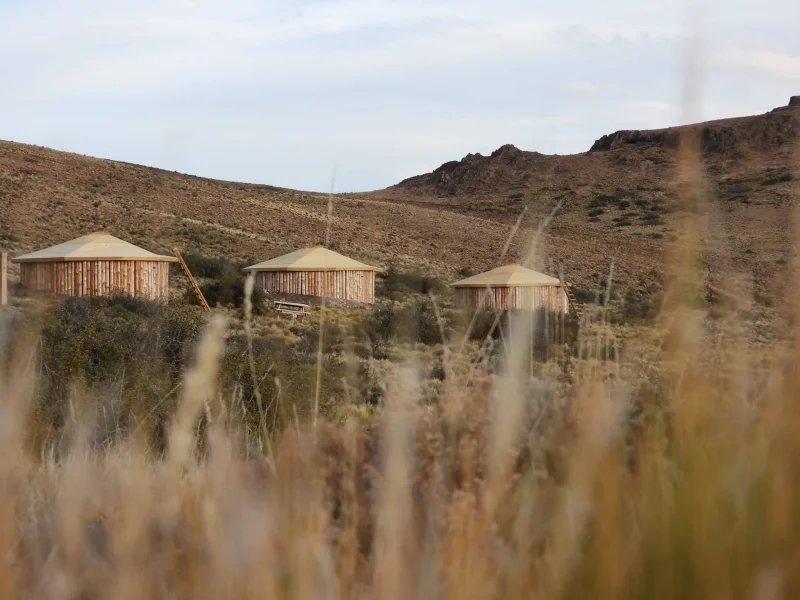
At the La Señalada campground, new wooden yurts are now welcoming guests – an alternative for those who want to spend the night in the steppe without camping. From this central location, trails of Portal Cañadón Pinturas set out, the Planetarium is just steps away, and beginning this season, visitors can arrive to the park by bus.
At Patagonia Park, staying overnight is part of the adventure. At the La Señalada campground, that came to life in a new proposal: the “Patagonian yurts” – wooden shelters set in the steppe, inspired by classic mountain refuges and designed for those who want to be closer to nature without giving up comfort.
“The idea came up because we realized we were missing an option for those who prefer a more immersive stay, but one that still has amenities,” says Natalia Correa, Coordinator of Nature Tourism Destination Development at Patagonia Park. “The park welcomes road trippers, families, and groups of friends who do not camp or travel by camper, yet still want to stay at La Señalada. Until now, there was no option created specifically for them. The yurts help us respond to that need.”
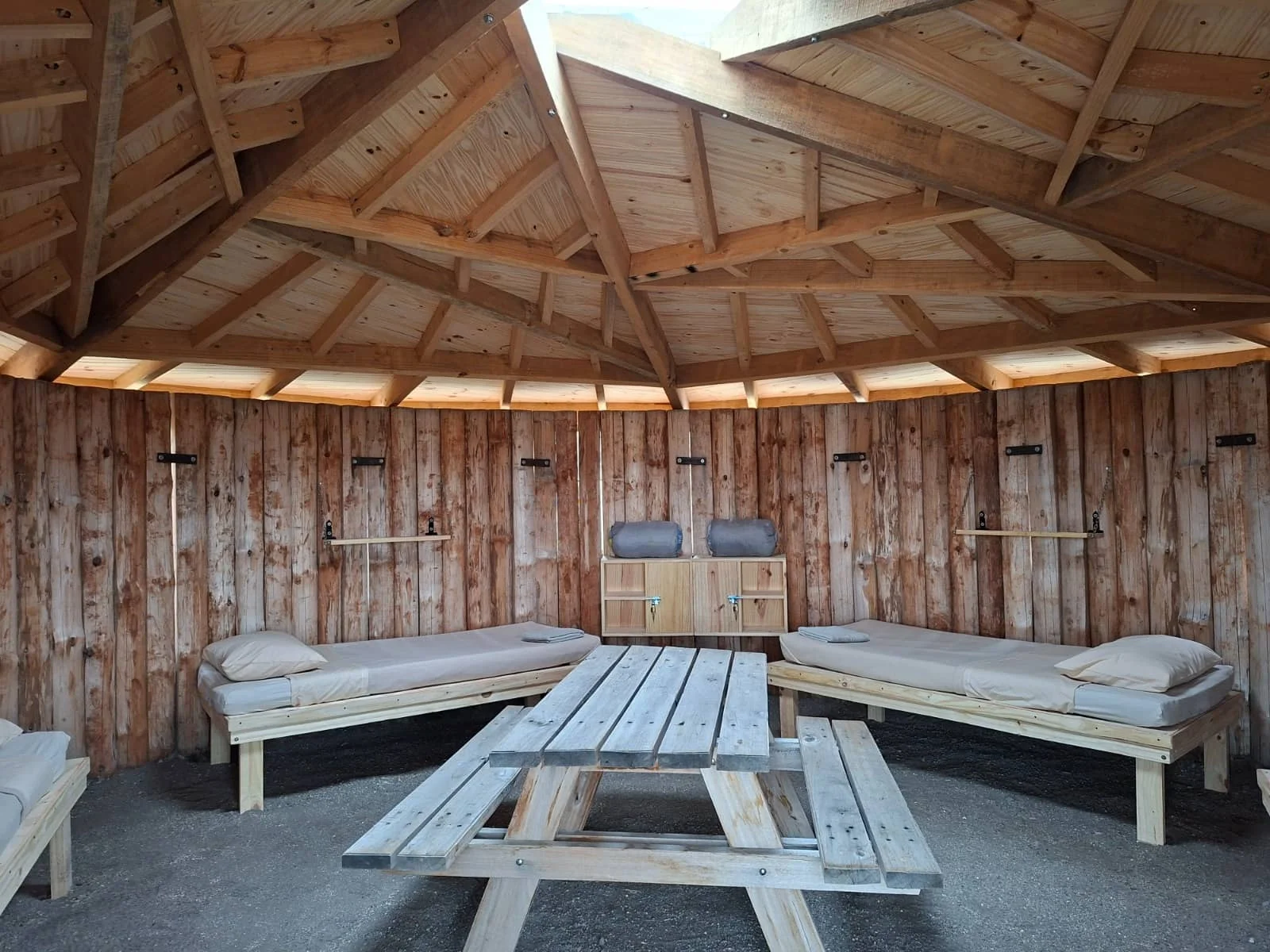
The new yurts are not tents, yet they are not a lodge either. Built on windbreak structures that shield them from the wind, they allow guests to experience the environment up close. “You can feel the breeze and the fresh air while resting comfortably in your bed,” she explains. They are equipped with bedding, pillows, a table for sharing the day, and a solid structure that provides shelter from the wind while still allowing one to be immersed in the steppe.
The location is no coincidence. La Señalada is the hub of the park’s Cañadón Pinturas Portal. Just a few meters away are the Interpretation Center and the Planetarium, and from there, visitors can access the trail network without getting back into their vehicle. From the same point begins the trail to Cañadón Pinturas and Bajada de los Toldos, connecting with the Cueva de las Manos area and returning via Vertientes or Balcones.
From La Señalada, the Vertientes trail also sets out and can be combined with the Guanaca trail. “It offers an incredible view from Cerro Amarillo, where you can see the meeting point of Cañadón Caracoles and Cañadón Pinturas,” Naty describes. For those seeking a greater challenge, she mentions Huella de Gradin – a 12-kilometer route designed for more experienced hikers.
The key is that everything can be explored on foot. “Guests staying in the yurts can experience the park without needing to get back into their vehicle,” she explains. The rhythm changes when the day begins and ends in the same spot in the steppe.
“The area is also ideal for wildlife watching. Guanacos and rheas are part of the experience, and at Balcones or Bajada de los Toldos you can often spot the endemic orange Wolffsohn's viscacha. From the Guanaca trail, condors are commonly seen,” she says. Outings with local guides allow visitors to cross different environments, pass by springs and wetlands under restoration, and understand how the landscape is gradually being repopulated with native wildlife.
Campfires, Open Skies, and a Traveling Community
At La Señalada, the day extends beyond the hike. The yurts invite guests to gather around the communal fire pit, cook over an open flame, and share stories with fellow travelers as daylight fades and the sky begins to fill with stars.
“This place really fosters the shared spirit of traveling in Patagonia,” says Naty. Families with children, groups of friends, travelers on the road. The structure functions as a large refuge open to the sky – comfortable and dynamic.
“The recommendation is to stay at least two nights,” Naty shares. Not only to explore the trail network at an unhurried pace, but also to arrange a wildlife outing, share a campfire, and enjoy Patagonian skies from that very spot – without rushing or skipping routes.
That experience is now even more accessible. Chaltén Travel has inaugurated a stop at the entrance to Portal Cañadón Pinturas, making it possible to arrive by bus from other destinations in the region. “Having a bus stop at Patagonia Park is a major step forward,” she notes. From there, the park team coordinates internal transfers to La Señalada for those who need them.
Today, choosing to stay at Parque Patagonia also means choosing the rhythm of the journey – one in which the day begins with trails just steps away and ends beside the campfire, under an open sky that needs no filter.