Unprecedented tracking study reveals what Patagonian pumas eat
For more than six years, researchers followed pumas in Santa Cruz to learn what they eat. The results show a diet dominated by native species and shaped by each landscape.
The research has been under way since 2019 in Monte León National Park, on the Atlantic coast, and in Patagonia Park, in the northwest of the province. There, teams from CONICET, Fundación Rewilding Argentina and foreign universities, including the University of California and the University of Wisconsin, monitor pumas equipped with satellite collars that record their location every three hours.
Thanks to this technology, it was possible to reconstruct the animals' movements and map thousands of sites where they remained for long periods. In many cases, these places were feeding points, allowing researchers to identify the prey consumed and build one of the most complete databases on puma diet in the Americas.
Two landscapes, two diets
Although guanaco appears as the main food source in both parks, differences between the protected areas are clearly reflected in the pumas' menu.
In Monte León, 44% of recorded prey were guanacos. The most striking finding is that penguins rank second, accounting for a quarter of the records. European hares, rheas, foxes, lesser grisons, hairy armadillos and even feral horses also appear.
In Patagonia Park, on the other hand, guanaco strongly dominates the diet, representing 72% of identified prey. Further behind are rheas, feral horses and other minor species.
The results show that, far from depending on domestic animals, pumas feed mainly on
native
wildlife, which is abundant in both parks.
Sheep
presence is very low in both studies, although researchers caution that monitoring still
needs
to be expanded on neighboring ranches to better understand what happens outside
protected
areas.
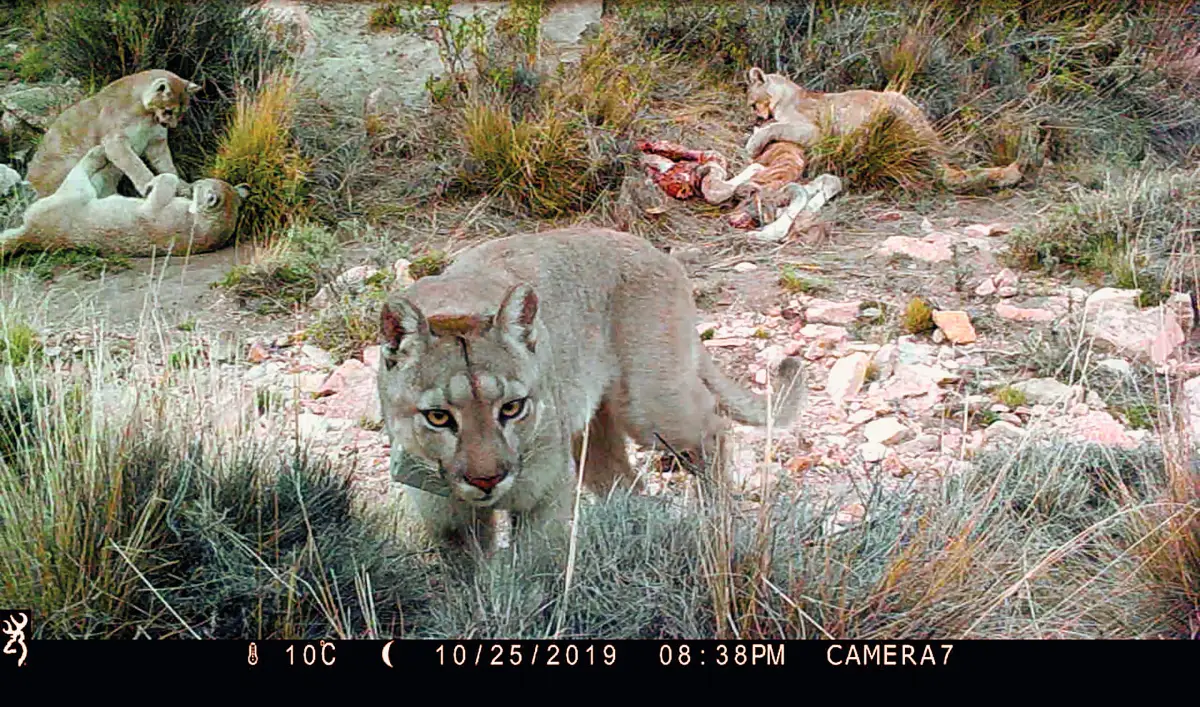
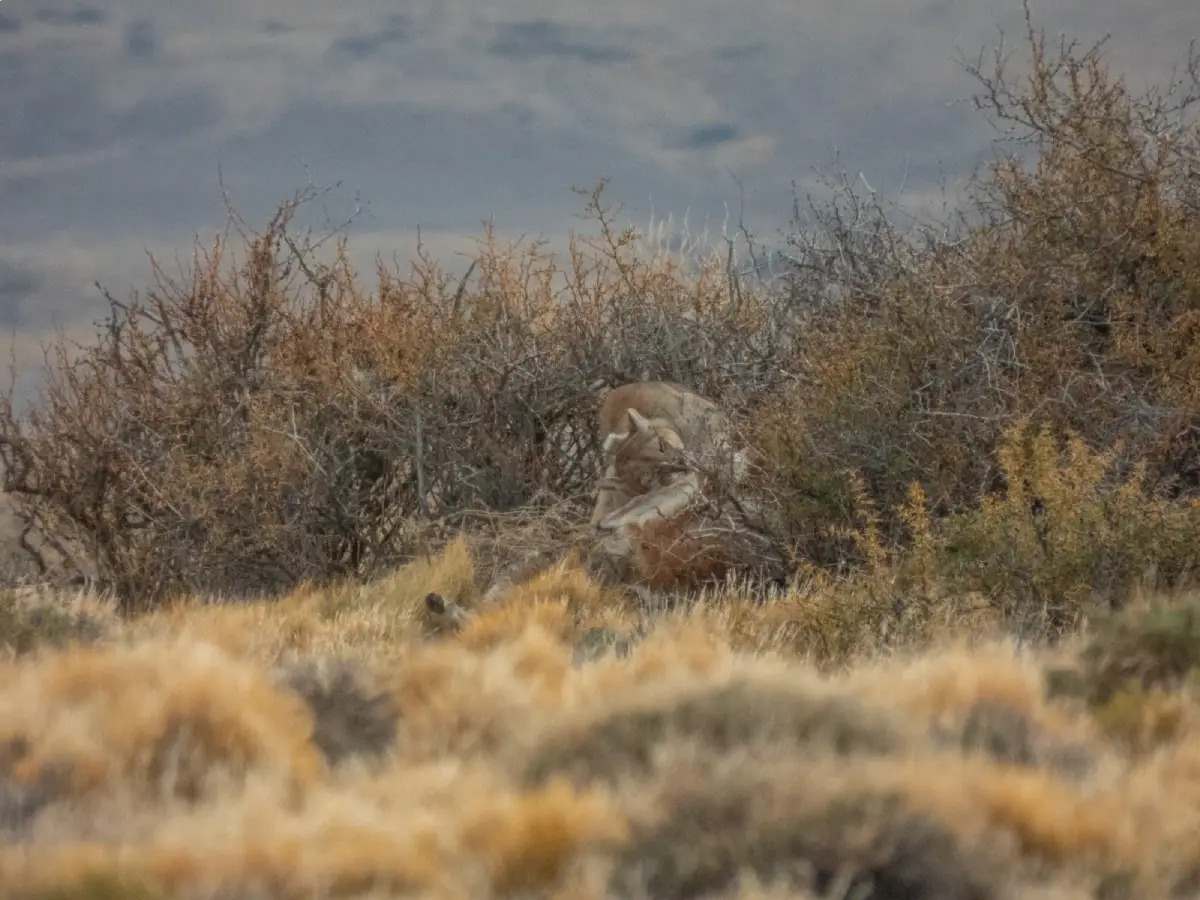
Early analyses also show differences between males and females.
In Monte León, females consume a greater variety of small species, such as hares, penguins, armadillos and foxes. Males, in contrast, focus much more on guanacos.
One possible explanation is body size. Adult females are smaller than males and can cover much of their energy needs with smaller prey. They also face fewer risks by avoiding larger animals.
This difference means that females have a more diverse diet than males.
Puma feeding also changes with the seasons
In Monte León, several females reduce guanaco consumption during spring and summer and take advantage of the massive arrival of penguins at the colony. Between September and March, these birds become an abundant and relatively accessible food source.
In Patagonia Park, something different happens, because during winter, when guanacos descend from the plateaus to lower areas, pumas increase their consumption. As a result, the presence of rheas, feral horses and sheep in their diet decreases.
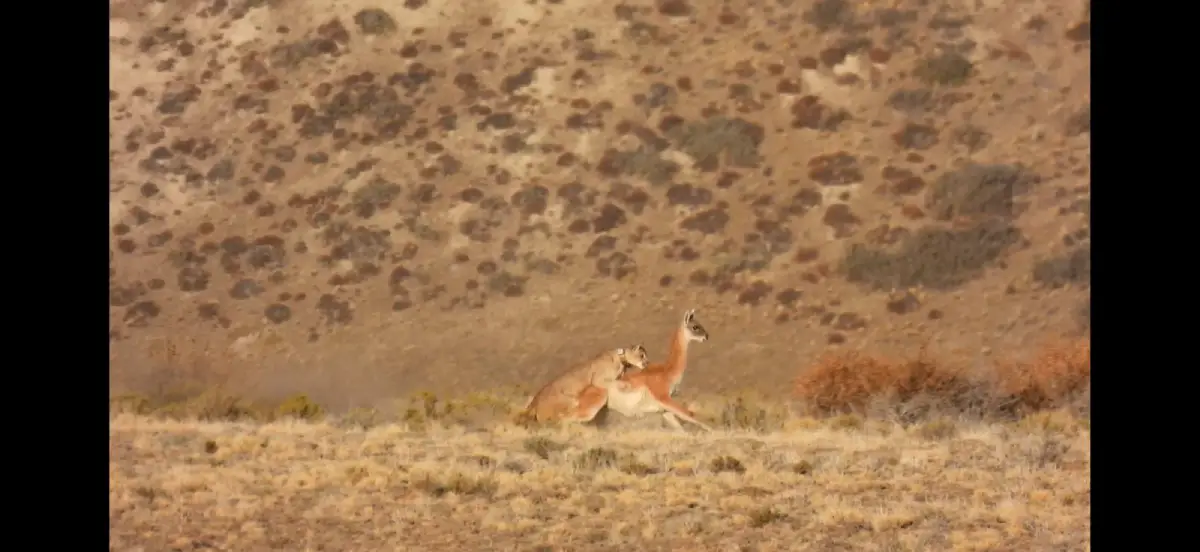
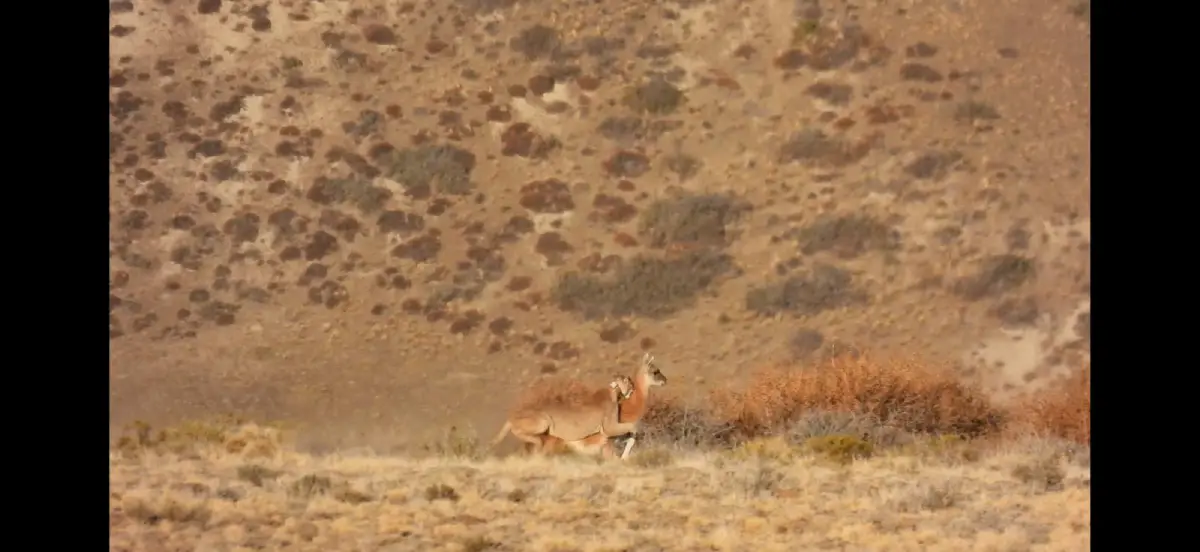
Beyond differences between regions, sex or seasons, the study leaves one clear conclusion: pumas are highly flexible animals.
Their diet changes according to the opportunities offered by each environment and tends to concentrate on the most abundant species at any given time. In the northwestern steppe, guanacos predominate; on the Atlantic coast, during some months, penguins can also be part of the menu.
Far from being a minor detail, this adaptability shows how closely puma conservation is tied to the health of Patagonian ecosystems. Where populations of native wildlife are abundant, the region's big cat finds enough food to sustain its role as one of the main natural regulators of Patagonia.
Photos: Emanuel Jaquier, Jose Bonomi, camera trap.