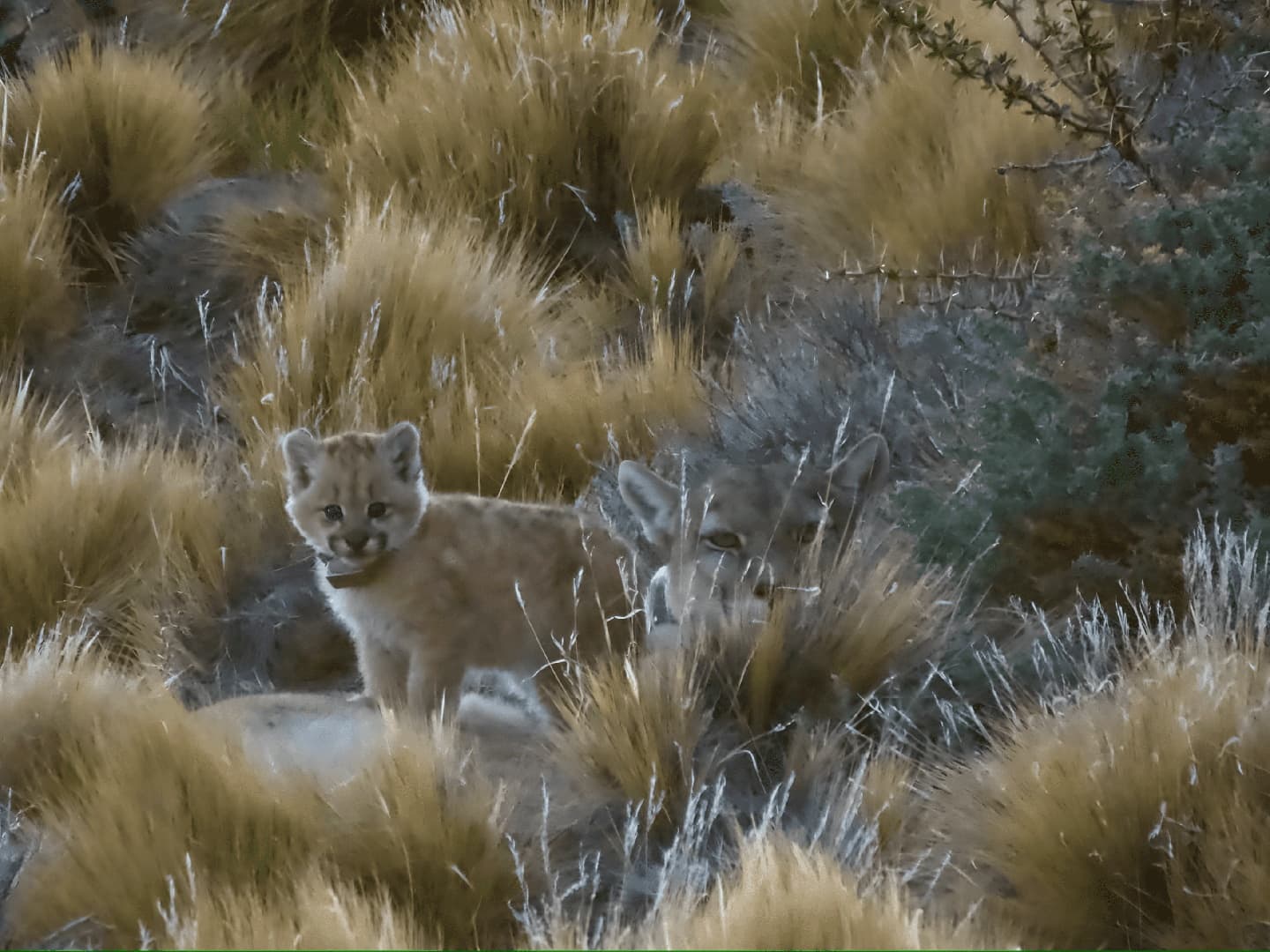
The story of Soledad, the puma cub growing up in Patagonia Park
In Patagonia Park (Santa Cruz), monitoring puma Mirta and her cub provides key information about the species and reveals signs of a recovering ecosystem. José Bonomi, a member of the park's conservation team, tells how it was to find her for the first time and follow her first months of life.
Mirta is the name given to one of the pumas being monitored in Patagonia Park, in northwestern Santa Cruz. For months, José Bonomi followed her movements through her satellite collar.
“The GPS collar points showed that she spent several days with Bandido, the dominant male who usually inhabits the Los Toldos area. I didn't get to see them together, but I did see them in the same area. At three months, one afternoon I came across Mirta and she had a huge belly: she was about to give birth,” José recalls. “I happened to need to leave the park for a few days, but I was anxious to see what would happen. When I came back, I went straight to check the place, thinking: ‘I hope there are three, I hope there are three,’” he says.
When he returned to the place, the scene was unforgettable.
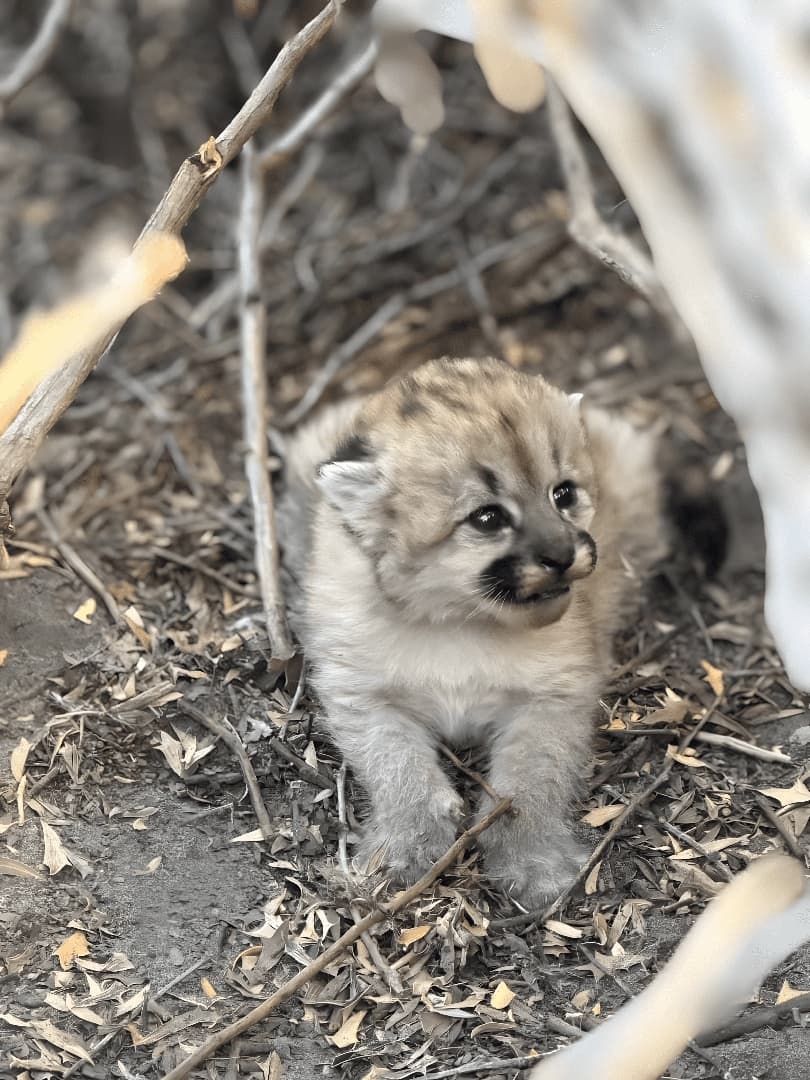
“The mother had gone out to hunt and in the bush I found a tiny cub that was alone. It was incredible. She was all by herself...”
That is why they called her Soledad.
First steps
Today, Soledad is just four months old. She still depends completely on Mirta, although she is growing at a speed that surprises even those who have watched her since her first days.
“At first puma cubs are not very agile. Their little legs are short and they struggle to get around on their own. It is very funny to see her follow her mother, who walks slowly and waits for her. As time goes by they become super agile, play a lot with their mother and start eating meat. Soledad is still nursing, but she is eating more and more meat,” José explains.
During this stage, the work of the Patagonia Park conservation team consists of following each of these changes without disturbing her wild life. “We try to monitor the cubs at least once every fifteen days. The main thing is to confirm that she is alive,” he summarizes. For this, during the first months they place an expandable collar on them, which falls off by itself around six months. “If the collar comes off or the puma dies, the device sends an alert that we pick up with our equipment. We immediately go to check what happened,” he explains.
There are also long observation days. “Generally we observe them from a distance where they feel calm. We keep records with a camera, binoculars and also camera traps, but mainly we go out into the field and look for the pumas.”
First winter
At just four months old, Soledad is going through her first winter in the Patagonian steppe. Although she depends completely on Mirta, she has already begun to discover that the most important skill for a puma is learning to survive.
“She is still very dependent on her mother. She has to learn to hunt. The life of an adult puma is quite difficult. Hunting a guanaco that weighs much more than they do is not easy, and mastering hunting technique is essential to survive,” he explains.
Independence is still a long way off. “They become independent between 12 and 18 months. Females generally take a little longer and tend to stay near the place where they were born. I hope Soledad stays around here, but there is still a long way to go before we know.”
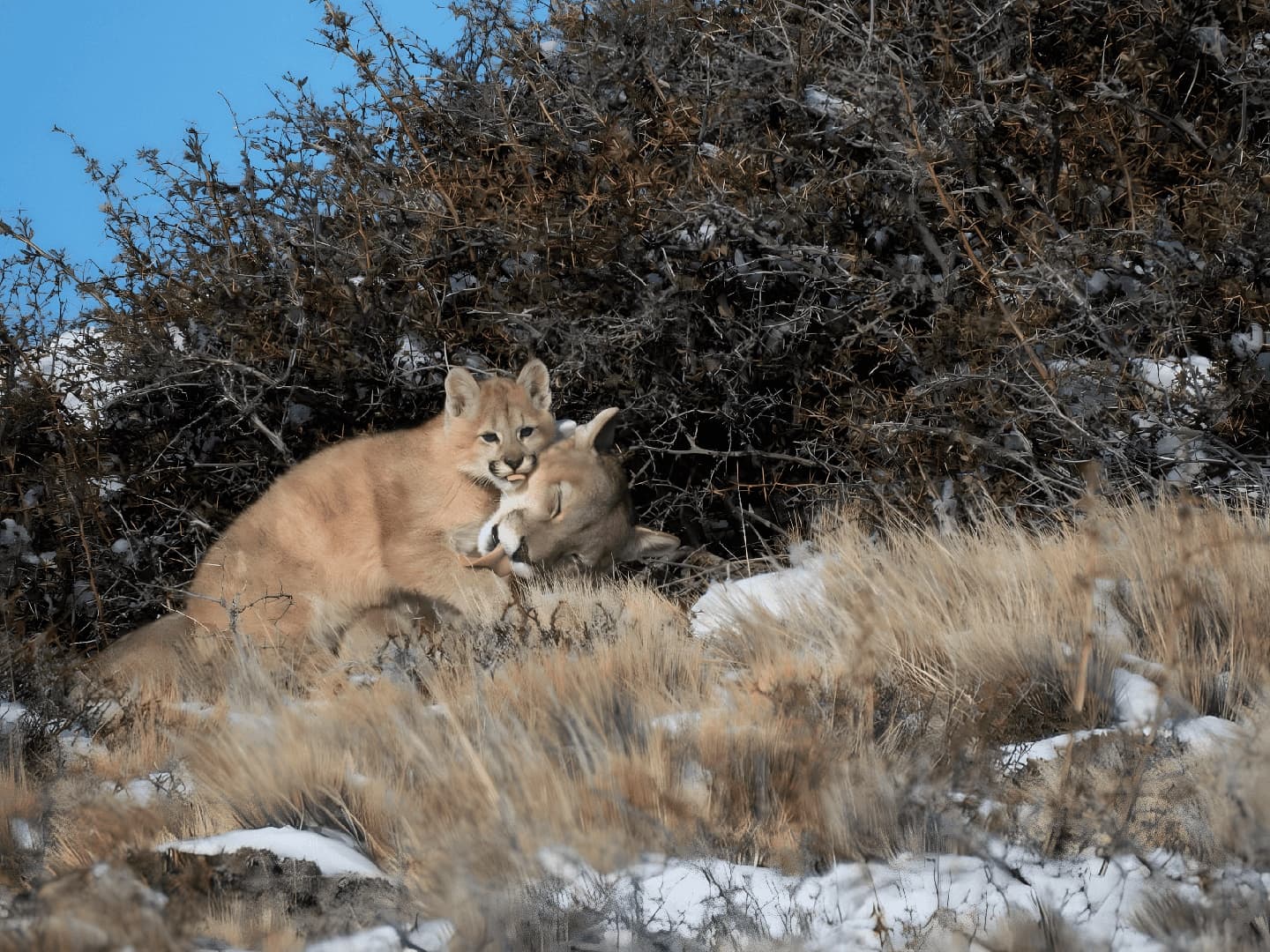
Meanwhile, José keeps collecting scenes he will hardly forget. “After a hunt led by Mirta, she and her cub stayed for a good while in a small canyon. Soledad was still very small, but she played a lot with her mother, climbed on top of her and they were so calm, despite our presence... it was tremendous,” he recalls.
Another image was etched in his memory. “I was able to see them walking through some gullies; the cub was already moving a little better, and seeing her jump from gully to gully was very funny.” And the first snowfall added an unforgettable postcard. “The next morning I went looking for her and I was able to see her in the snow. That time was also tremendous.”
What Soledad tells us
Following Soledad also helps us understand how the ecosystem around her responds.
Since the cub Soledad was born, her mother, Mirta, intensified her hunting activity to
feed her during the winter.
“It impresses me to see her stalking all the time. Having to feed a cub in the middle of winter demands a huge amount of energy. It is impressive how effective she is at hunting. We have found many carcasses that show a good abundance of prey in the park to keep them alive. We are very happy with the state of the ecosystem inside the park,” José says.
That is why, for the conservation team, each new litter represents much more than a birth. “Recording a new cub is a good sign. For a wild animal, reproducing is very energetically costly. The fact that Mirta was able to have a cub means that she is meeting her needs. We believe it is a clear sign of the good conditions for wildlife that the park offers.
For José, following Soledad's growth is also imagining the future.
“It is a tremendous joy. I always have the hope that they grow up and become the
future of the park.”