
Guanaco migrations: when the steppe moves
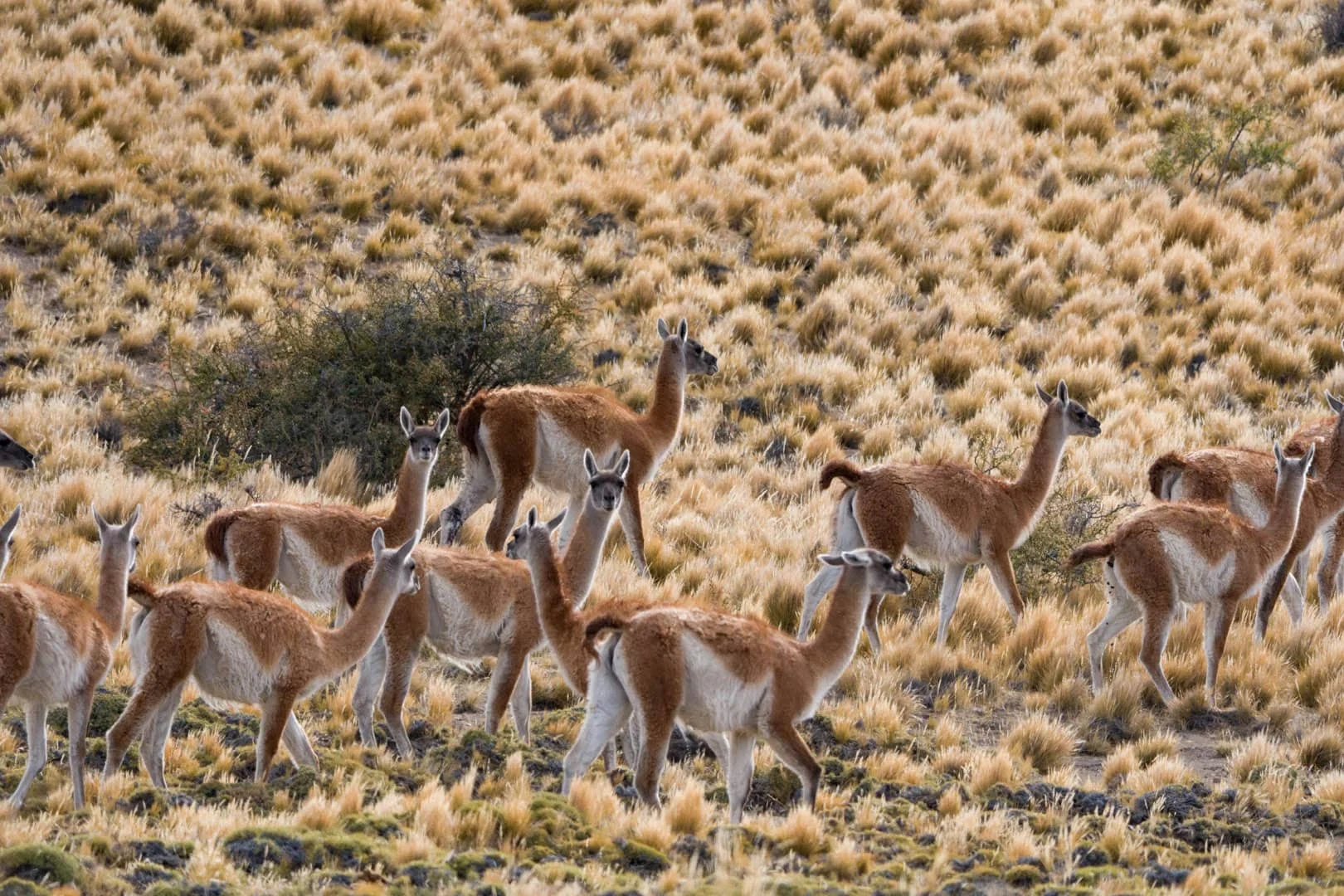
With the arrival of cold weather, guanacos prepare to begin their seasonal migrations from the plateau to lower areas – movements that help maintain the balance of the steppe. How these routes come to be is still under study, while they are increasingly affected by fences and other barriers.
In northwestern Santa Cruz, when the cold starts to change how the air feels, the steppe shifts into a different rhythm. It is not something that becomes immediately visible or obvious at first glance, but it happens nonetheless. The guanacos begin to prepare.
For weeks, even months, groups remain on the plateaus. There they spend the summer taking advantage of the tender, nutrient-rich grass shoots that are only available during this season. But when the first snowfalls mark the landscape, something is triggered – and the migration begins.
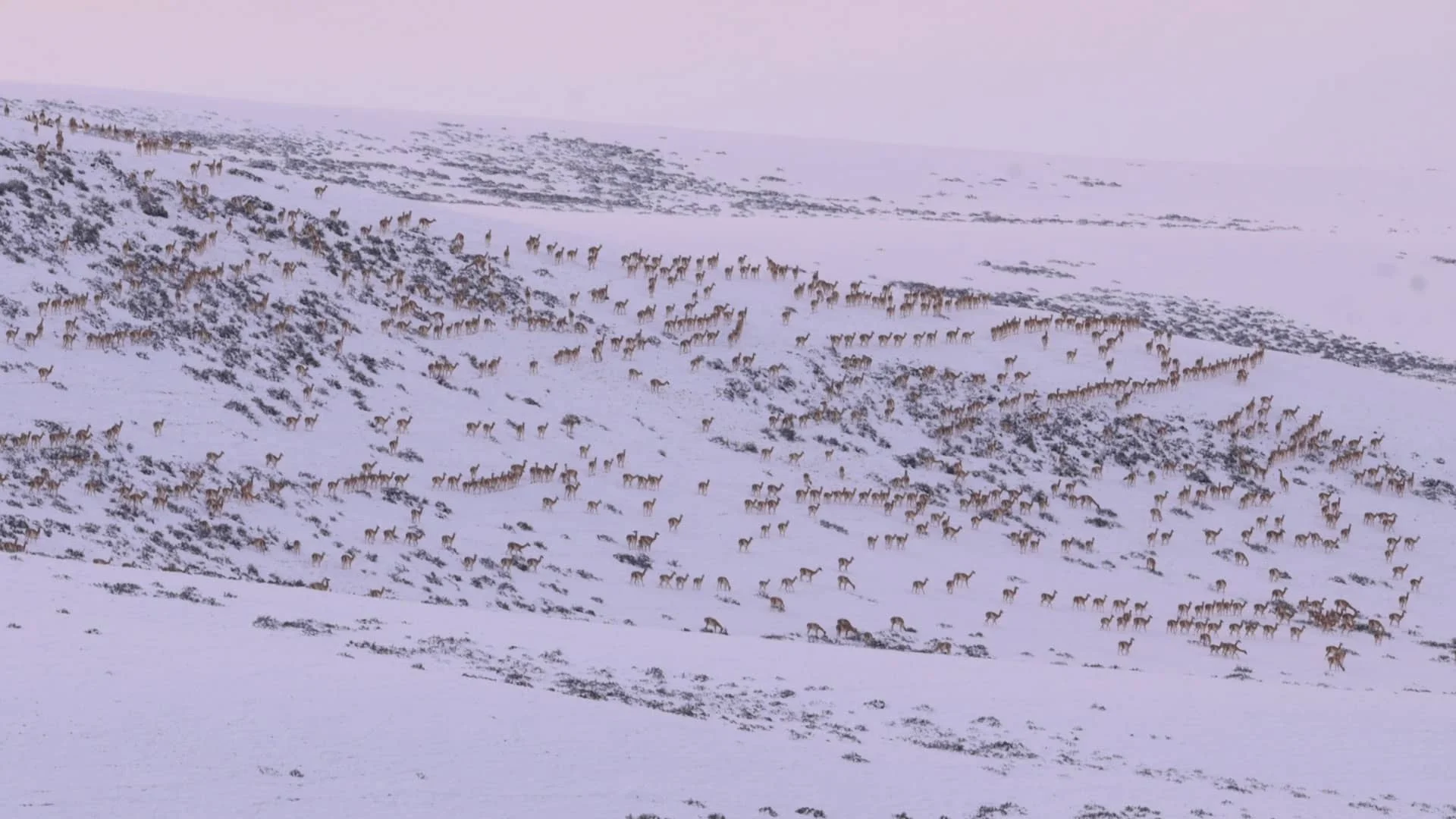
Year after year, different groups follow the same routes between high-altitude areas and lower regions of the province. “Migratory movements are characterized by seasonal back-and-forth movements involving a large number of individuals at the same time,” explains biologist and scientific director of Rewilding Argentina, Emiliano Donadío.
In Santa Cruz, winter movements usually occur between March and June, although there is no fixed date. “They depend heavily on weather conditions. In general, they begin when snowfall makes it harder to stay on the plateaus.”
“At the moment, these movements in Santa Cruz have not yet started, but it is likely they will soon, once snow begins to accumulate on the plateaus.” The two populations studied to date in the province – in Patagonia Park and Monte León – and the only populations in South America studied in depth using satellite technology, allow these migratory movements to be closely monitored.
As these movements begin, there are also ways to recognize them in the landscape. It is not necessary to see the animals moving to understand that something has changed. “Winter migration is identified because it becomes possible to observe how the wintering areas start to be populated by guanacos descending from the plateau where they spent the summer,” Donadío explains.
“These movements may still occur in much of the province, but in Patagonia Park they have been well studied, so it is relatively easy to notice when they are happening.” These are movements involving many individuals at once, repeated every year, although they depend on weather conditions.
Not all guanacos behave the same way
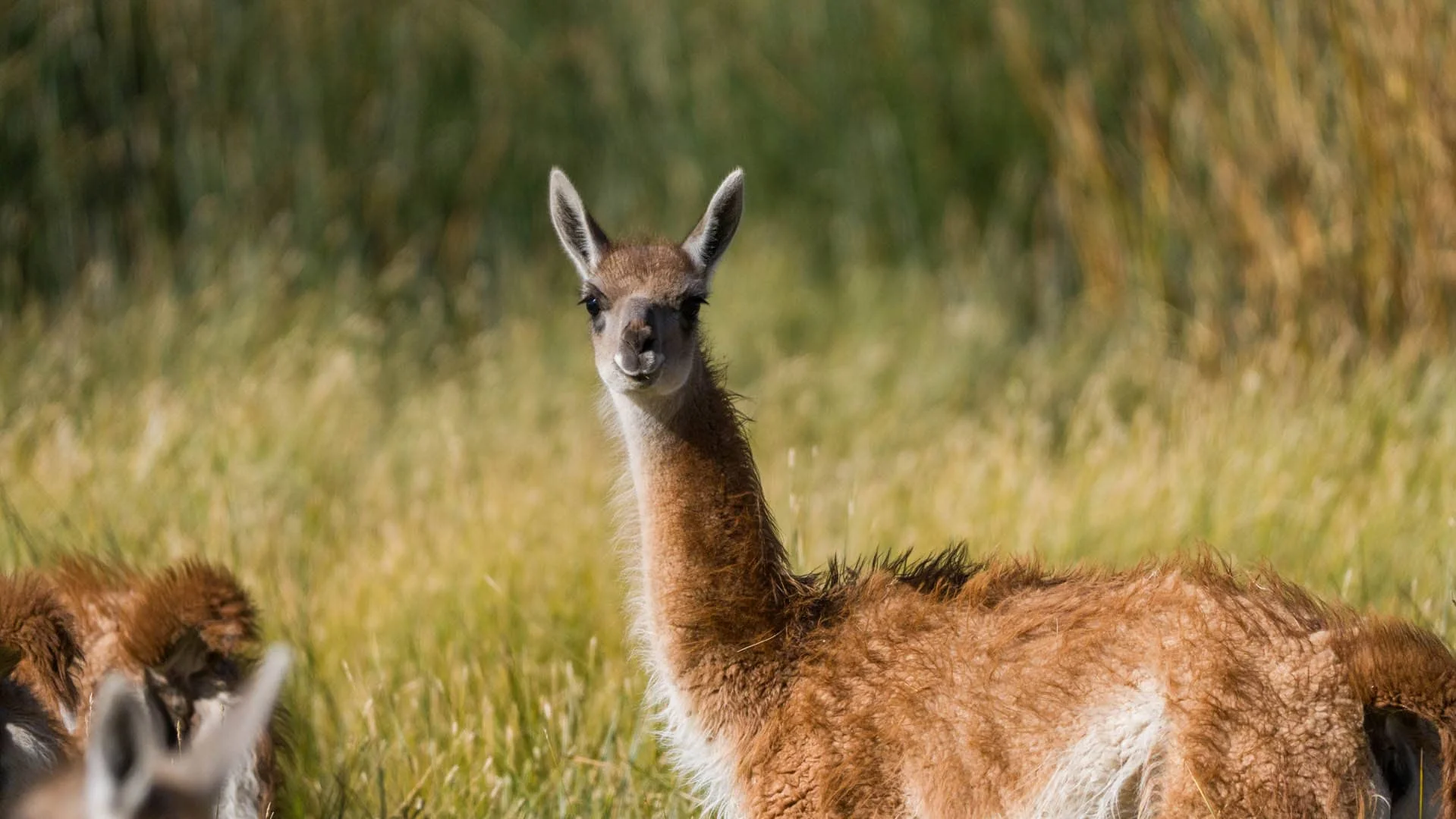
“The individuals that migrate can take advantage of better pastures than those that do not migrate,” he notes. And this “would allow them to have a higher probability of survival and successful reproduction.” This difference between groups raises a question that still does not have a single answer: not all guanacos migrate, even when living in similar environments. Understanding why this difference occurs remains an open scientific discussion.
In recent years, some studies have begun exploring an idea that adds another layer to the phenomenon. There are indications that these movements do not depend solely on the environment or climate, but also on information transmitted within groups.
“The central idea of this theory is that migrations depend on socially learned information, rather than a predetermined genetic ‘programming,’” Donadío explains. In other words, “Learning is more important than instinct.”
This line of research suggests that animals are not born knowing how to migrate, but rather acquire that knowledge through experience. “Migrating animals learn routes, timing, and destinations by observing more experienced individuals,” he explains. “Studies conducted in North America show that, in large herbivores, migration is largely cultural and not strictly genetic. Although we do not have studies of this kind on guanacos, it is reasonable to think a similar situation could occur.”
However, the debate is not settled.
What’s at stake is not only movement
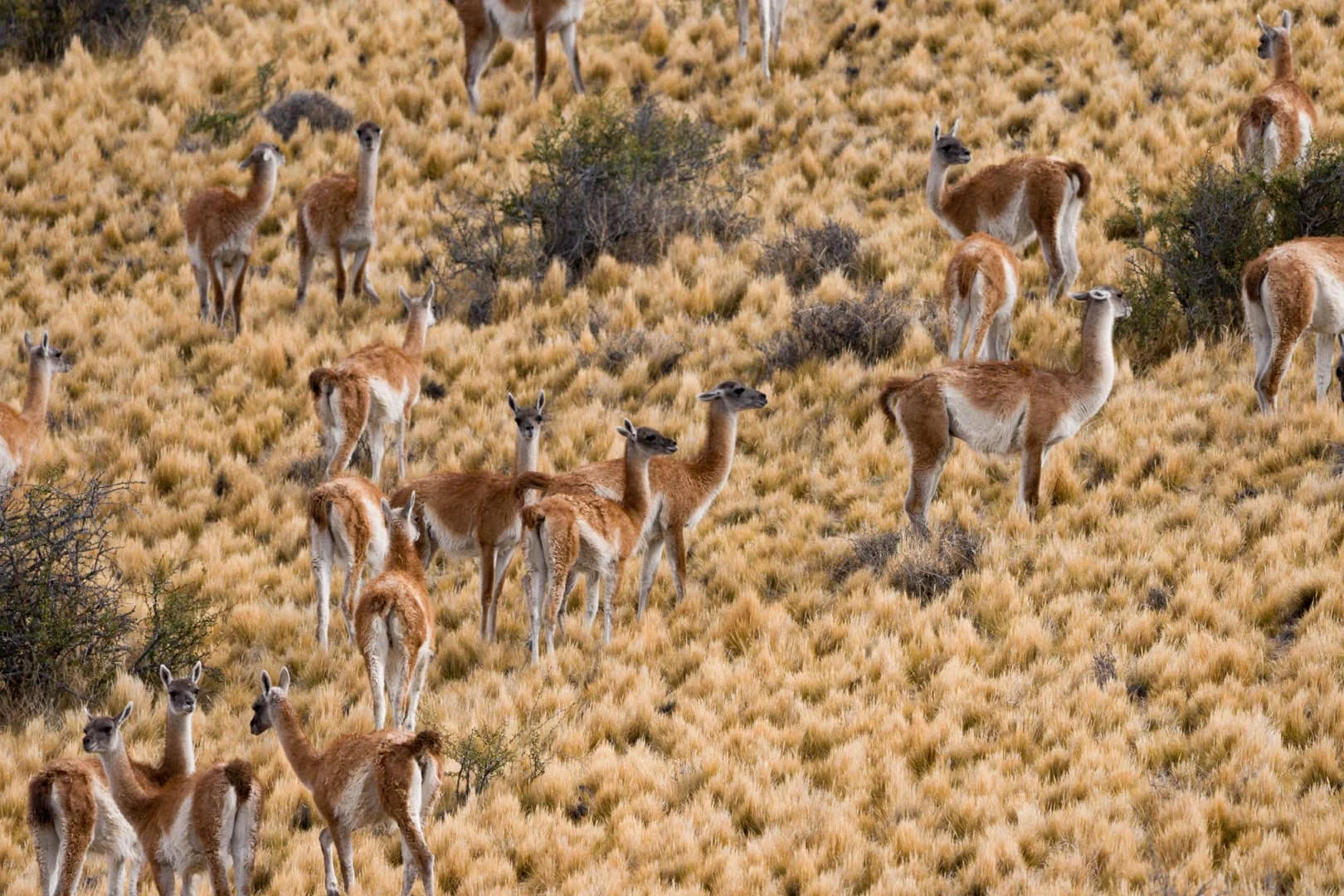
“When migrations are interrupted, the cultural memory that sustains them does not simply ‘pause’. It tends to erode and, over time, disappear,” Donadío explains.
“That memory lives in individuals, especially adult females and experienced leaders, and in the social interactions that allow it to be transmitted.”
At that point, the system begins to break down. If animals cannot complete their routes, new generations fail to learn them. And this is where one of the main problems arises.
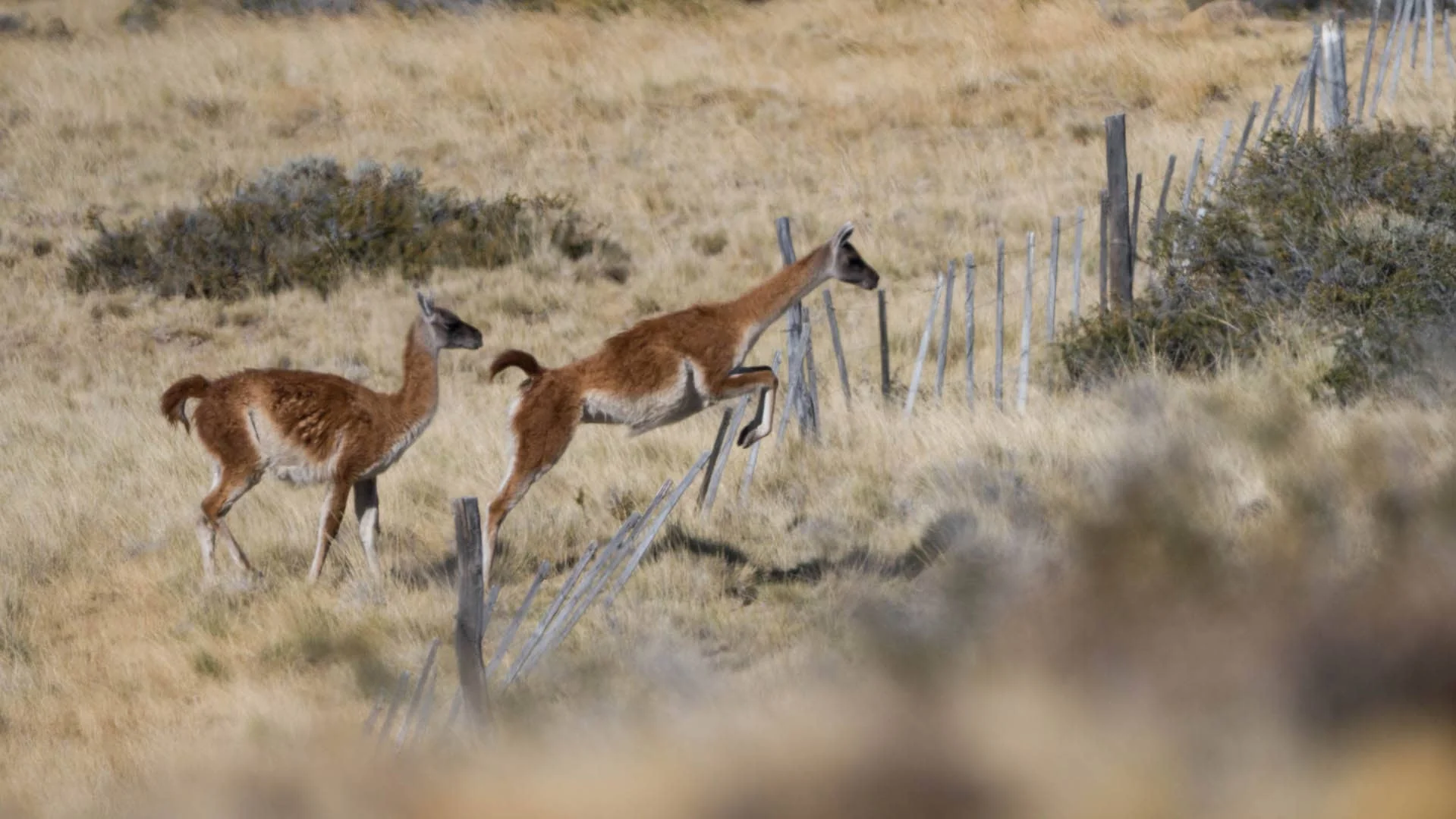
“In winter in particular, fences can become a lethal barrier for guanacos.” In some cases, snow prevents them from jumping over them and animals become trapped on one side. “They end up dying from cold or starvation,” he describes.
This also occurs year-round, when guanacos attempting to jump get caught. “A study carried out by CONICET researchers in Río Negro showed that at least 6.4% of the population dies after becoming entangled in fences. If extrapolated across Patagonia, this means thousands of animals per year,” he warns.
When this happens in the middle of winter, the situation is even more critical.
“If a group cannot complete its migration, it is because it has encountered an impassable barrier,” he explains. Under those conditions, “it is possible that the animals will not survive an increasingly harsh environment.”
What is beginning to change
To reduce deaths from entanglement, fences themselves can be modified. Emiliano Donadío explains that “the top wire can be removed, since it is the main cause of these entanglements.” Where this solution has been tested, preliminary data show a significant reduction in incidents.
Openings can also be created for younger animals that cannot clear the fence height. These are simple interventions, but with a direct impact on survival.
However, the scale of the problem goes beyond a single location, so “not only at the provincial level, but across the entire range of the species, removing the top wire and modifying intermediate wires could be implemented to create passage spaces,” he suggests.
“The loss of migratory processes does not only affect guanaco populations.” It also impacts ecosystem functioning. “It interrupts processes of nutrient redistribution, seed dispersal mechanisms, and reduces environmental heterogeneity.”
In other words, when these movements stop, the steppe changes too. “It implies the loss of mobile ecological functions, mechanisms that connect ecosystems across space and time.” Each year, when the cold returns, some groups repeat the journey. They move down, cross through, search for different conditions. They follow a map that cannot be seen, but still exists.
Photo credits: Agustina Ojeda – Franco Bucci – Rewilding Argentina