Pinturas Canyon: a landscape meant to be explored from within
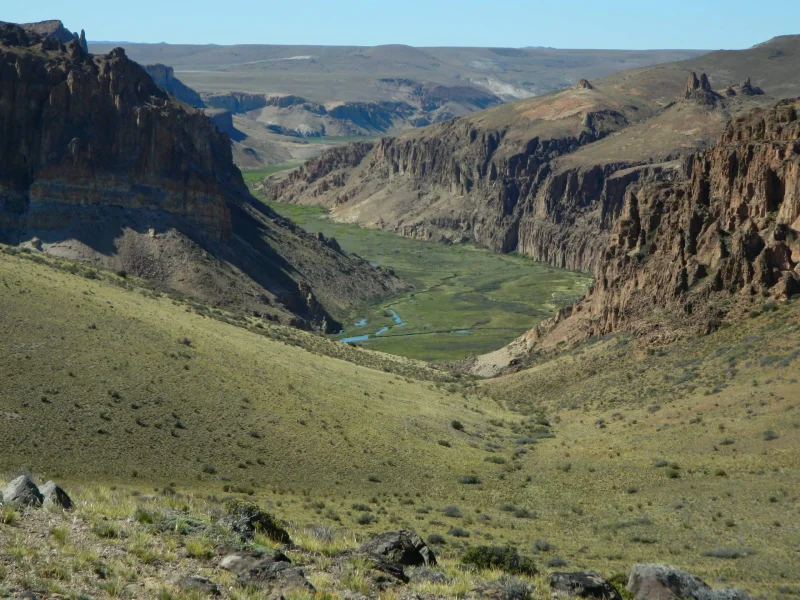
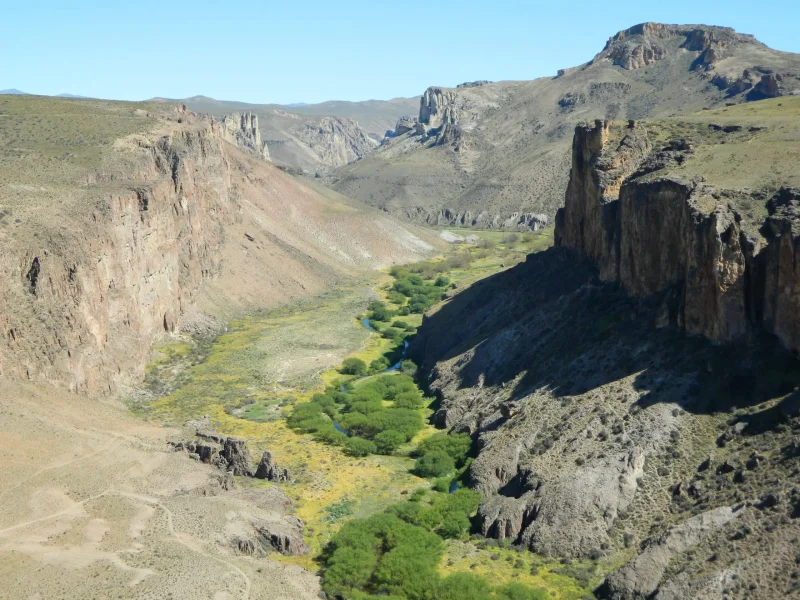
Unlike mountains, canyons are descended into. In the Pinturas River Canyon, that inward journey reveals a landscape that brings together human history, geological time, and countless ways of moving through the steppe.
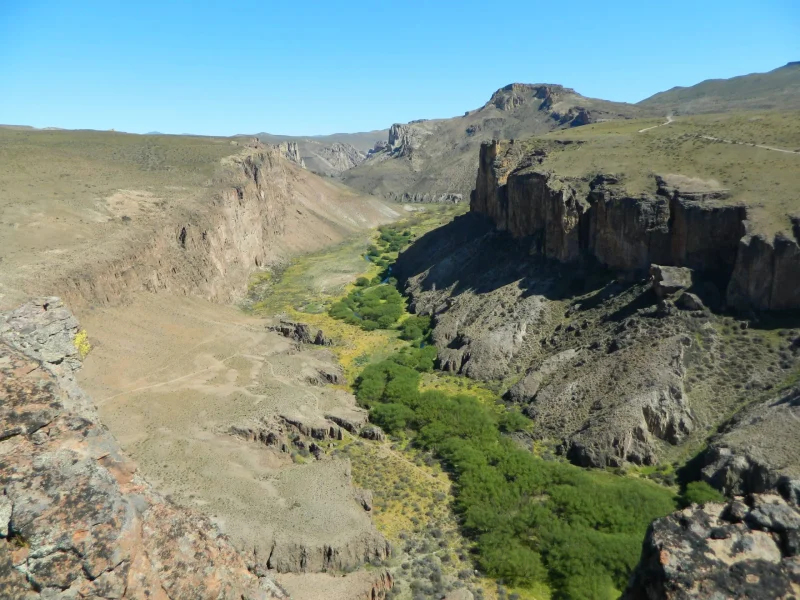
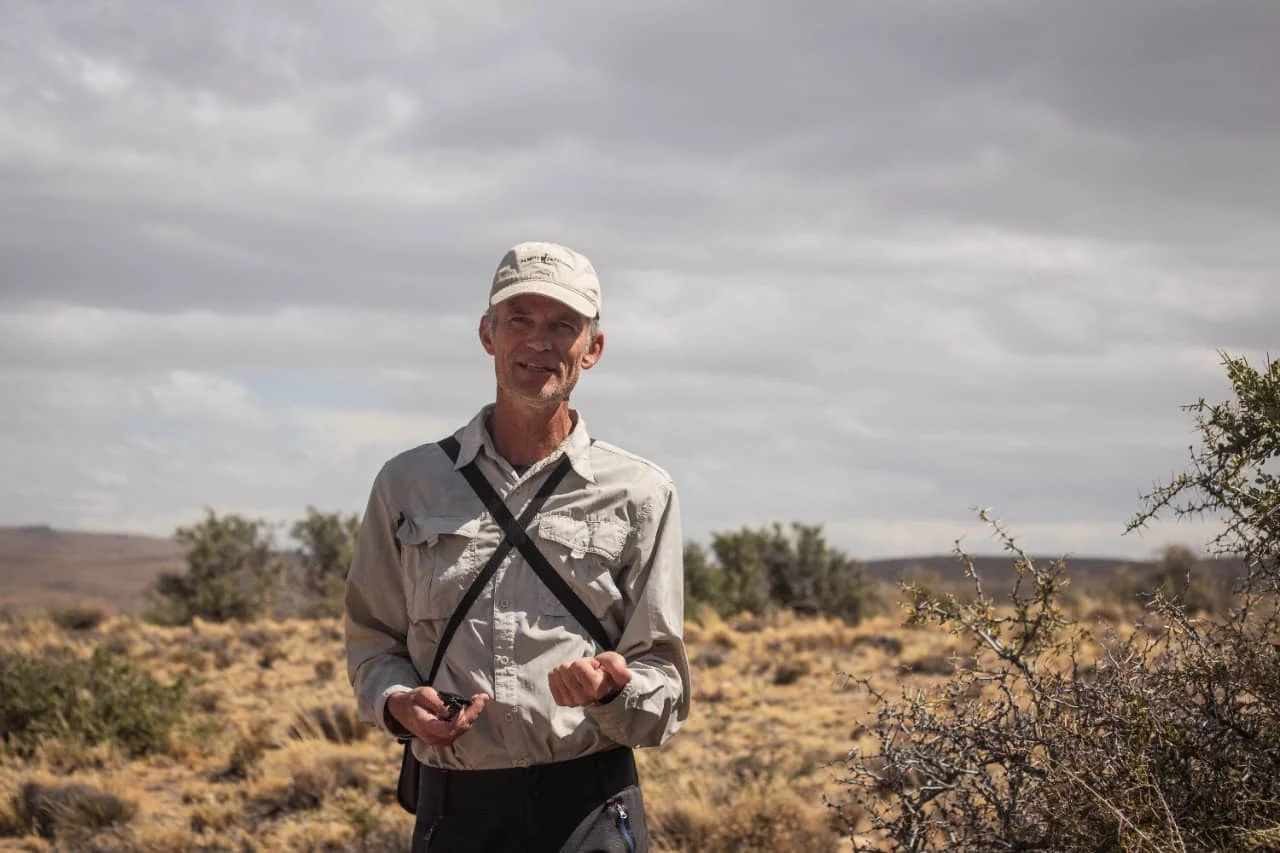
When Guido Vittone thinks about canyons, he describes them as “inverted mountains.” As a guide and expert on the landscape of northwestern Santa Cruz, he finds in that image a key to understanding the Pinturas River. “Instead of going up, you go down… it’s about entering the earth a bit, going into its depth.”
The experience shifts from the very beginning. Unlike the mountain range, where the horizon opens up, in canyons the view shortens, curves, disappears. “You never see very far as you go,” he explains. “There are bends, a constant suspense about what might come into view.” Even returning to the same place, there is always something new to discover.
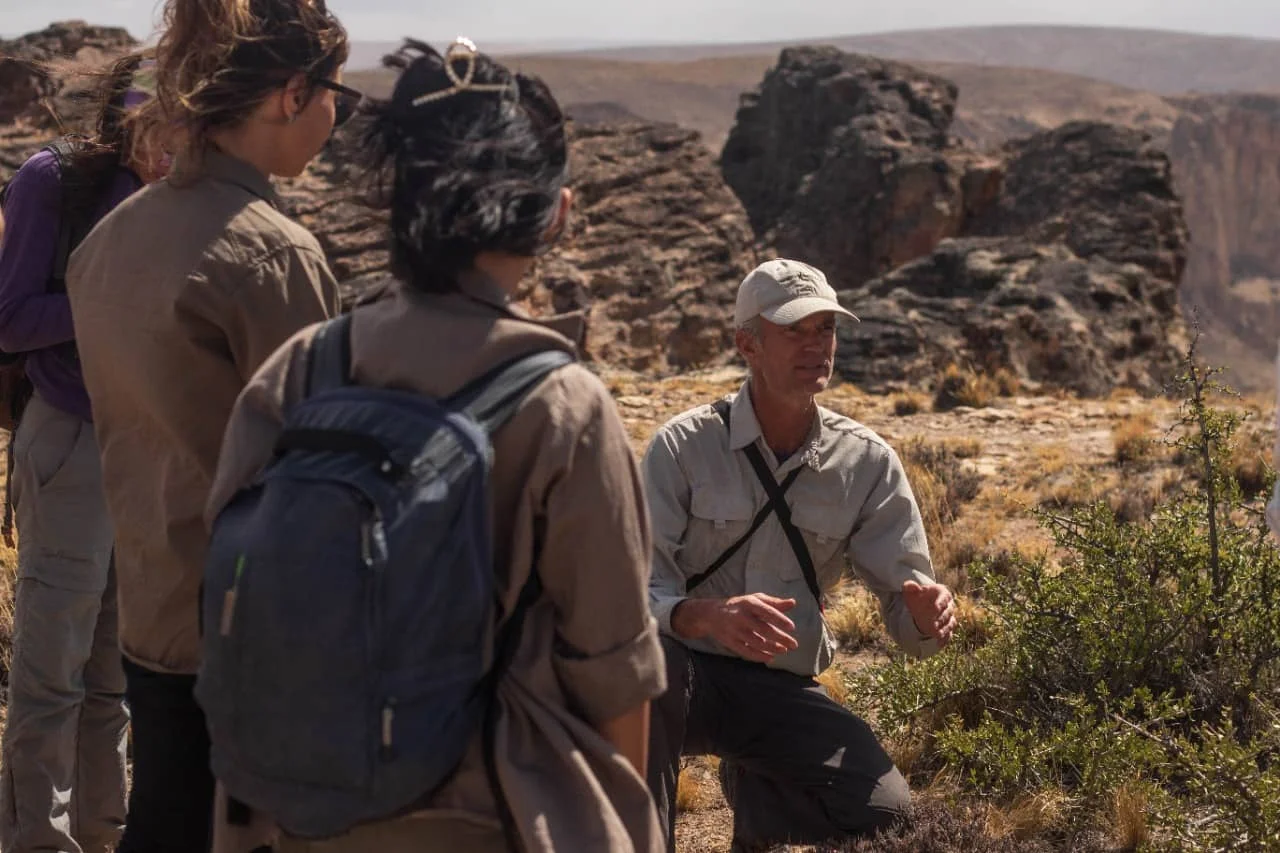
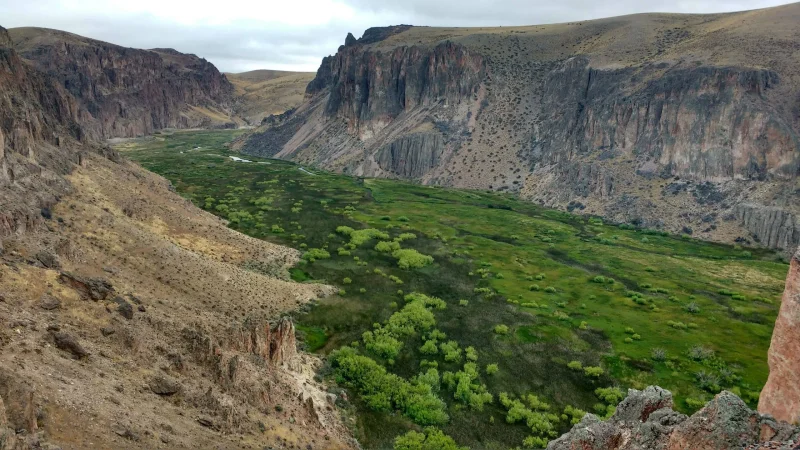
That “intricate” character is not common in Santa Cruz. “Canyons are much less frequent, almost isolated,” he notes. In the Pinturas basin, however, that logic multiplies. “It’s like a great knot of canyons… a network, a labyrinth,” he describes – a landscape that constantly breaks apart and reassembles with every step.
But above all, the Pinturas is a lived-in space. “Mountains were places you went to out of necessity, but not where people lived. Canyons, on the other hand, were,” he explains, referring to the populations that inhabited the area thousands of years ago.
That presence did not remain in the past. It is visible in archaeological evidence, but also in more recent traces. “Stone shelters, plantings, constructions, corrals, even ranches established within the canyons themselves.”
Traveling through time
Exploring the Pinturas also means shifting scale. “The deeper you go… the further back in time you travel,” he says. And in that descent, time becomes visible on the canyon walls.
This journey reveals how the landscape was formed. “The great flows of glacial water, the evidence of their advance… all of that is there,” he explains.
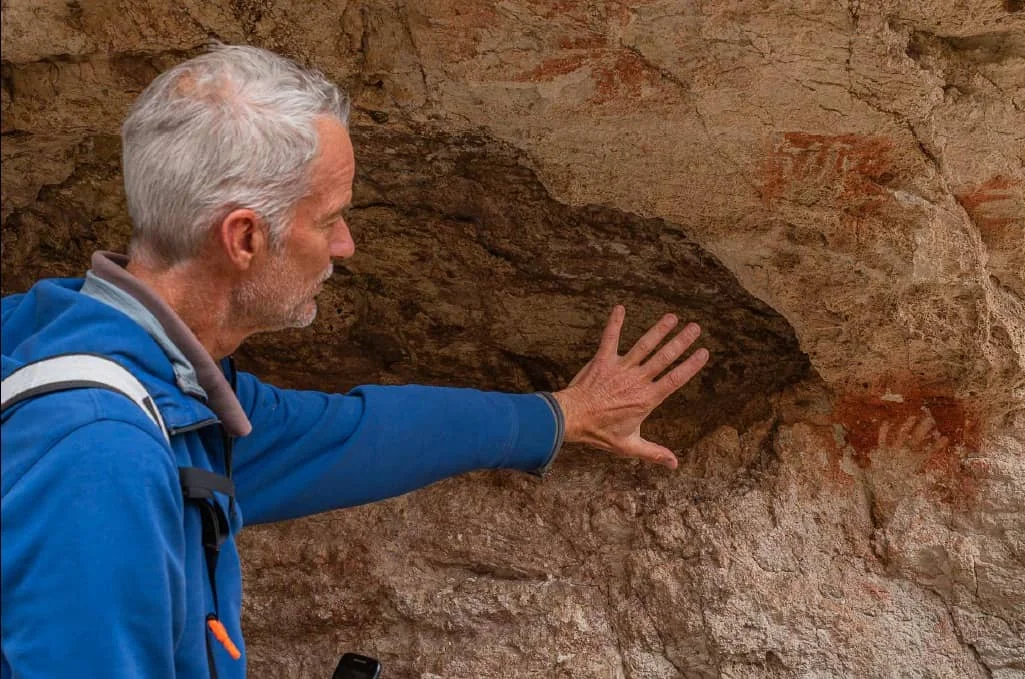
And the human presence makes the experience even more intense. “The rock art is so powerful that it confronts us with our own way of seeing,” he reflects, referring to the hands, animals, and figures painted on the canyon walls. In doing so, it challenges a very common idea: “It might seem like a different history from ours, but it really isn’t… They looked at the night sky – the same one we see – and thought very similar things.”
The Pinturas Canyon feels familiar, even if it is not always deeply known. Still, there is something that repeats itself: “Both visitors and locals are deeply moved when they experience it.”
The challenge of protecting the Pinturas Canyon
Vittone does not seek a single way of interpreting the place. “There are fragmented perspectives,” he says. Some people arrive, take a photo, and move on, with little interest in going deeper. Others pause, ask questions, try to understand. There is also the discourse of conservation, and another, less visible perspective – that of those who live and work in the Pinturas.
Guido draws a distinction: “While the way people once used the canyon – for subsistence – is very different from its current use, which is touristic and recreational… I could also say the canyon feeds me,” he adds with a laugh, “but not through hunting guanacos, rather through the tourists I guide and explain things to.” This, he says, “does make us reflect on societies, the passage of time, and our priorities.”
Within that intersection, knowledge also plays a role. “For me, it’s important to know what publications and archaeologists say,” he notes.
“Everyone can experience it in their own way,” he says. And in that openness lies perhaps one of the best ways to discover the Pinturas Canyon. It is a landscape that moves you, that makes you breathe deeply when faced with its vast presence. And it is a place that, to be understood, must first be entered from within.
Guido Vittone shares this perspective through talks and guided excursions in the area, where he combines knowledge, experience, and a close, engaging way of telling the story of the landscape. He also shares his work and content on social media, where he can be followed at @guido_vittone_47sur_patagonia.